Experience smarter sample management
Discover how the right platform can help you overcome your top sample management challenges, and watch the full demo video to see more
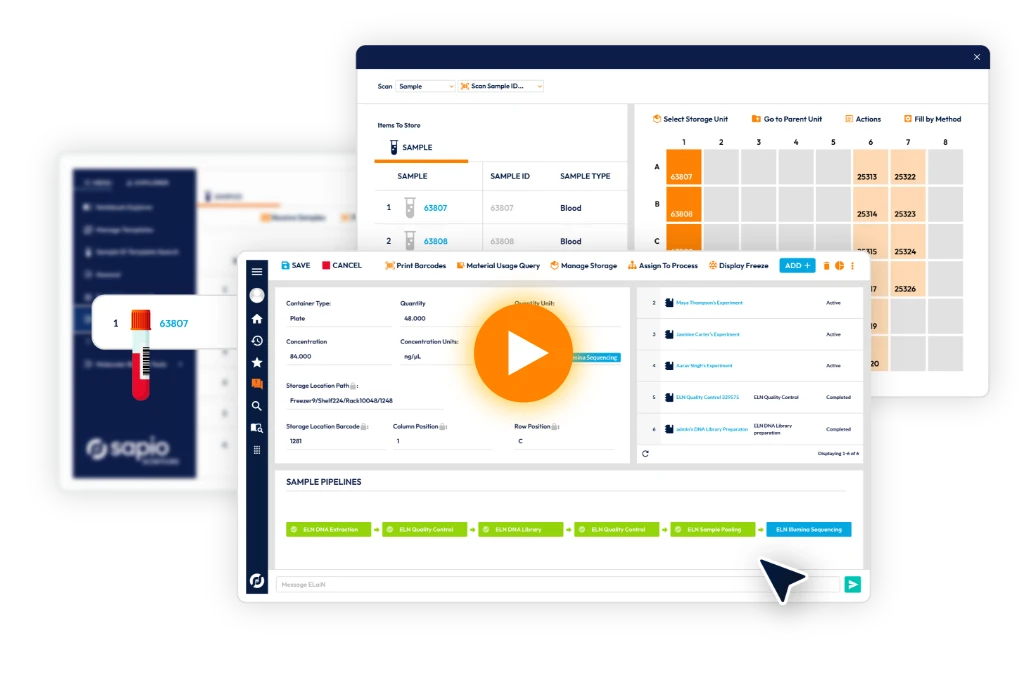
In today’s high-throughput, data-driven labs, sample management is so much more than a process—it’s the backbone of scientific productivity. Yet too many teams are still stuck in a cycle of manual data entry, disjointed systems, and stressful audit prep.
Sapio’s end-to-end, AI-native lab sample management platform unifies the entire sample lifecycle, from registration to storage and analysis, inside one intelligent, intuitive system. Let’s look at four of the biggest sample management challenges today’s labs face—and how Sapio changes the story.
Keep scrolling to learn more and unlock the full demo video.
Manual sample registration
The challenge: Many labs deal with largely manual sample intake and registration workflows—leaving room for missing data, duplication, and delays. This process becomes even more complex for labs that handle larger volumes of samples or a multitude of sample types.
Sapio simplifies sample registration with:
- Barcode and RFID integration to automatically capture and route new samples
- Support for the full diversity of sample types, including blood, tissue, DNA, antibodies, and more
- Flexible import capabilities, whether from manifests or batch uploads
See how automated intake accelerates the first step of the sample lifecycle.
Sample traceability
The challenge: When working from disparate systems and tools, understanding sample lineage and relationships is challenging at best. Scientists spend significant time finding and reconciling the information they need, leaving less time for experimentation and analysis.
Sapio enables true end-to-end sample traceability with:
- ELaiN, an embedded AI co-scientist that helps you build complex search queries with simple prompts
- Real-time dashboards to understand lineage, location, condition, and processing status at a glance
- Unified ecosystem that brings together sample data, experimental workflows, inventory management, results reporting, and more
Watch how the right system makes traceability second nature.
Storage and environmental monitoring
The challenge: Lack of storage visibility and environmental monitoring can have detrimental impacts across the sample lifecycle—a freezer failure is caught too late and samples degrade, a specific sample isn’t in the freezer you expect, and the list goes on.
Sapio supports efficient sample storage and environmental monitoring with:
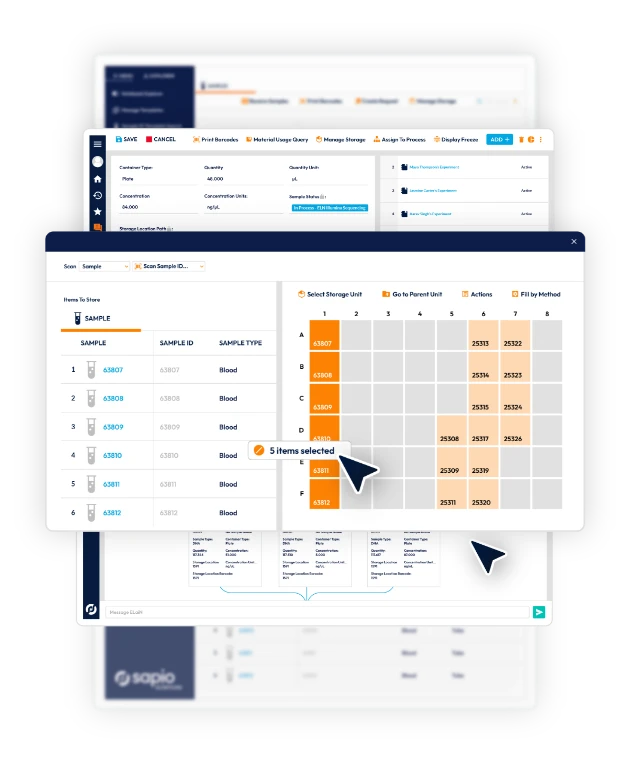
- Smart storage routing with simple drag-and-drop
- Temperature and humidity sensor integration, plus configurable alerts to rapidly identify discrepancies
- Real-time visibility into sample location and environmental status
Compliance and audit readiness
The challenge: When labs rely on manual workflows and fragmented systems, audit preparation is both time-consuming and stressful. A reactive approach to compliance increases the risk of error, which can be especially problematic in highly regulated lab environments.
Sapio makes audit preparation and proactive compliance simple with:
- Automated, time-stamped audit trails to log every sample action and ensure proactive audit readiness
- Configurable, role-based permissions and version control for ongoing compliance and user accountability
- Embedded SOP enforcement to eliminate deviations and ensure adherence to procedures
See how proactive compliance saves time and eliminates stressful prep.
Ready to see Sapio in action?
Fill out the form below to unlock the full walkthrough and discover what intelligent sample management looks like for your lab.