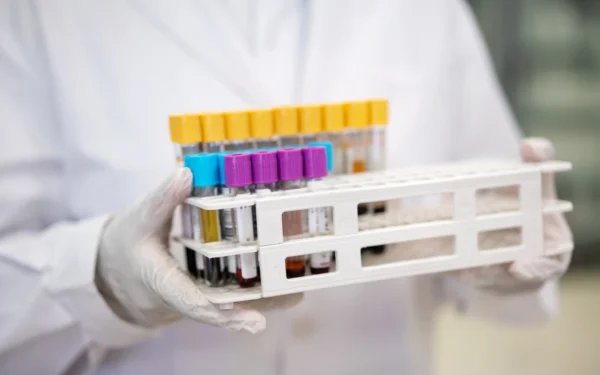
Biobanks are indispensable to modern science, underpinning research in genomics, oncology, infectious disease, and drug development. Their impact depends not only on careful storage of biological specimens but also on the ability to rapidly find, trust, and act on the sample data that travels with each vial and aliquot. As collections scale and collaborations expand across sites, biobank sample management grows increasingly complex.
Ask a biobank manager how quickly they can locate a specific vial, produce a chain-of-custody report, or compare freezer status across multiple facilities, and hesitation often follows. The challenge extends beyond preservation: it’s about orchestrating the data model, workflows, and compliance scaffolding around every specimen without compromising data and sample integrity or operational speed.
When scientists and operations leaders discuss biobank operations, four recurring challenges surface. Each highlights the features that modern biorepository management software should deliver.
1. Data that lives everywhere and nowhere
Biobanks often inherit a tangle of record-keeping systems. A legacy LIMS (laboratory information management system) manages intake. An ELN (electronic laboratory notebook) stores experimental annotations. Spreadsheets track freezer contents. Metadata might be buried in email attachments or paper logs.
This fragmentation creates a paradox: there’s plenty of sample data, but little confidence in it. Reconciling records is time consuming, sample histories get lost, and collaboration across sites falters, particularly in multi-site biobanks that support global programs or decentralized clinical trials. The lack of a connected biobank sample management system means a scientist in Zurich, for example, can’t easily see what’s sitting in Boston, even though they’re working from the same collection.
Core capabilities that address this issue include:
- Support for standardized data formats to improve interoperability between systems and ensure data consistency.
- Centralized registration and harmonized metadata that unify studies, sites, and storage units in a single record of truth.
- Complete sample lineage and traceability, linking parents, aliquots, pools, and slides to preserve the full sample lifecycle.
- Granular governance with role-based access control, ensuring staff see only the information their role requires, reducing duplication, and minimizing risk.
2. Manual processes in a high-throughput world
Even large repositories still rely on spreadsheets or handwritten notes for intake, labeling, inventory management, and routing. These manual methods don’t scale. and are prone to human error. As sample volumes increase, bottlenecks form and error rates increase, leaving staff to spend hours on repetitive updates instead of higher-value work.
Biorepository solutions should streamline these operations and be capable of accommodating different biobank sizes and use cases. A modern management system should include features like:
- Configurable workflows that mirror real-world lab operations—intake, location assignment, aliquoting, and retrieval—while adapting quickly to new study designs or logistics.
- Barcode and RFID labeling to eliminate manual entry, standardize biospecimen sample tracking, and integrate seamlessly with freezer inventory management systems.
- Automation through event-driven triggers, enabling proactive notifications for requests, shipments, and discrepancy resolution, which reduces delays and human error.
3. The weight of compliance
Biobanks must comply with rigorous frameworks such as FDA 21 CFR Part 11, EU Annex 11, GLP, ICH, and privacy laws like HIPAA and GDPR. Each regulation requires full traceability, SOP enforcement, and inspection readiness. Yet, in many organizations, compliance feels like an added burden rather than a natural outcome of operations. Scattered systems make compliance a constant scramble, with teams rushing to assemble evidence during audits.
Features that embed compliance into daily practice include:
- Comprehensive audit trails that capture every intake, aliquoting, storage move, shipment, and discrepancy resolution event with time stamps and user attribution.
- Secure permissions via role-based access control, paired with electronic signatures to enforce approvals and authorizations.
- Version-controlled SOPs and regulatory controls, embedding procedures directly into workflows to minimize variability.
4. Seeing samples in real time
One of the most common frustrations voiced by biobank leaders is the lack of real-time visibility. Knowing exactly where a sample is, its condition, and its processing status often requires phone calls, cross-referencing spreadsheets, or even physically walking into the freezer room. The risks are serious: delayed shipments, missed study timepoints, or unnoticed freezer excursions that compromise biological specimens. Modern biobank sample management software must deliver instantaneous answers to: “Where is this sample? What condition is it in? Who last accessed it?”
Technologies that make this level of visibility possible include:
- Live location mapping, tracking every specimen down to freezer, shelf, rack, and box.
- Shipment orchestration workflows, managing pack-outs, manifests, and receipts while capturing discrepancies for audit purposes.
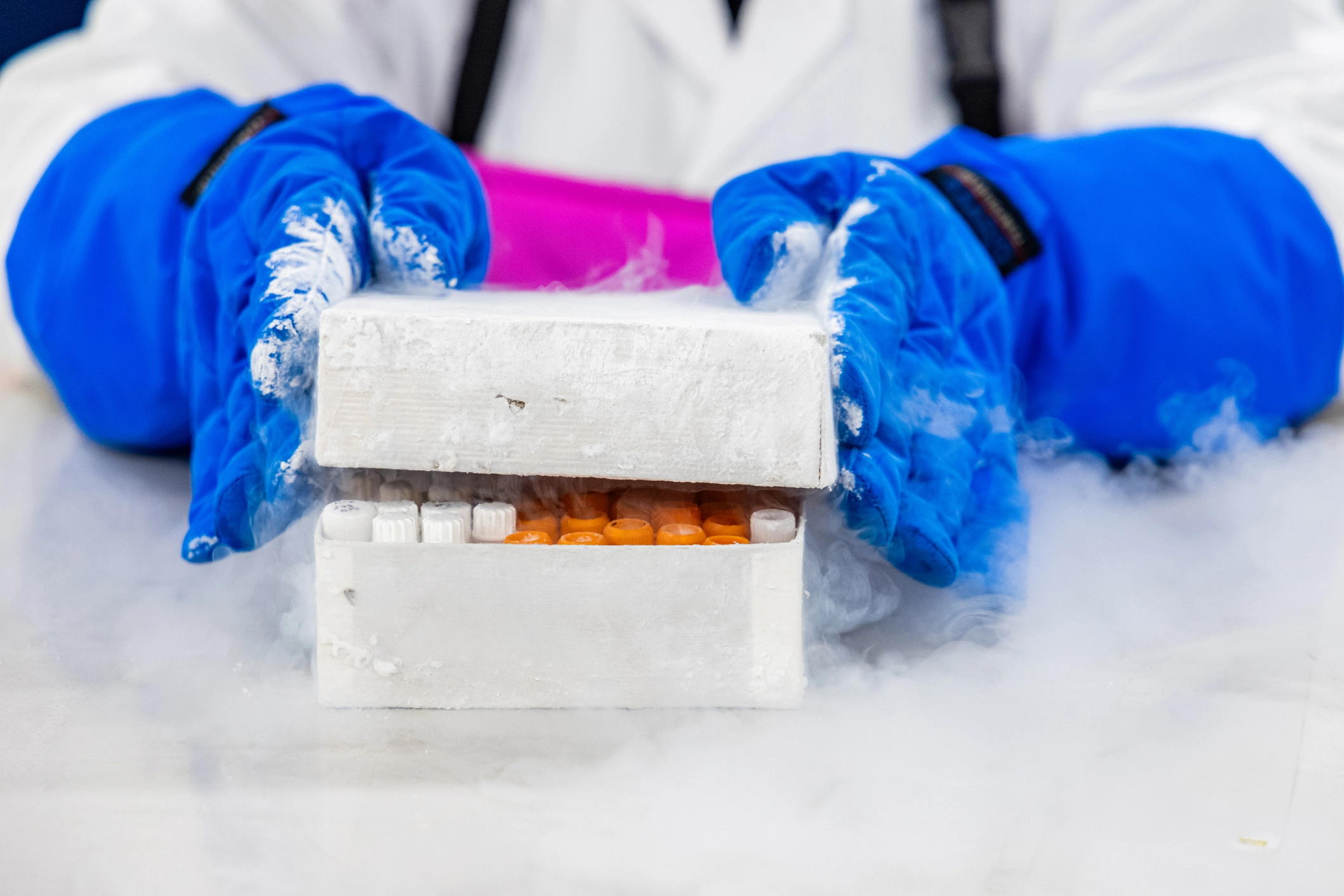
- Environmental monitoring with automated alerts that flag freezer excursions and identify impacted aliquots in seconds.
- Natural-language or guided search, enabling staff to ask questions like “Which aliquots are in Freezer 4, Rack 7, Shelf B?” or “List samples affected by last night’s temperature spike” and retrieve answers instantly without building complex queries.
The bigger picture
Biobanks are not just storage facilities. They are active enablers of biomedical research, supplying the materials and sample data that drive translational science and precision medicine. Yet as complexity rises with more samples collected, more sites, and stricter compliance, outdated tools simply cannot keep pace.
Meeting today’s demands requires systems that unify fragmented data, automate workflows, embed compliance, and provide real-time traceability across locations. Anchoring operations to globally recognized standards, such as ISO 20387:2018 and community guidance like ISBER Best Practices, positions biobanks to demonstrate rigor, reliability, and scalability.
With these pillars in place, improving biobank sample management becomes achievable at scale, supporting medical research programs with the operational strength and regulatory confidence needed to accelerate discovery.
Sapio’s Biorepository Software
This is exactly what Sapio’s Biorepository Management Software is designed to deliver. Built for both research and regulated environments, it consolidates essential capabilities into a single, unified platform that integrates LIMS, ELN, and a Scientific Data Cloud for end-to-end control of the biological specimen lifecycle.
In practice, the platform addresses the core challenges of biobank sample management through:
- Unified data and lineage. Centralized sample registration, robust parent–child sample tracking features, and integrated analytics ensure every decision is backed by reliable data.
- Automation at scale. No-/low-code workflow design, barcode/RFID labeling, and task automation reduce cycle times and manual entry errors.
- Compliance and trust. Comprehensive audit trails, version-controlled SOPs, electronic signatures, and role-based access control safeguard data integrity and support readiness for FDA 21 CFR Part 11, EU Annex 11, and other regulatory frameworks.
- Real-time visibility. Live storage mapping, inventory management, shipment workflows, and excursion alerts ensure specimens are protected, traceable, and always ready for future research purposes.
Because these capabilities live within Sapio’s broader unified informatics platform, labs no longer need to chase sample data across disconnected tools. The outcome is smoother operations, consistent documentation, stronger collaboration, and a scalable foundation for global biobank networks. To learn more, get a demo to see our sample management software in action.